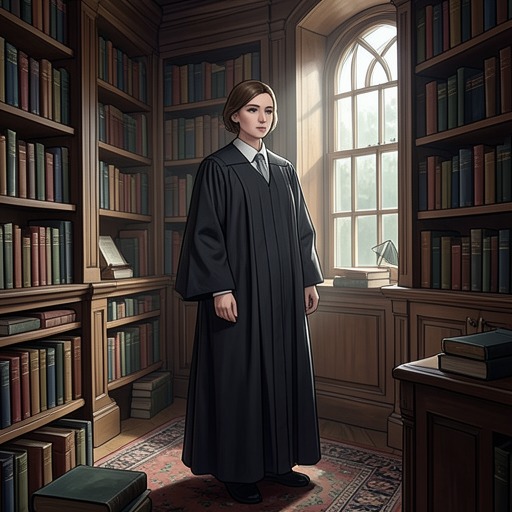
Aunt Jamesina
Anne of the IslandAunt Jamesina is the unconventional housekeeper at Patty's Place, where her warmth and respect for independence turn a shared student household into a lasting home. Invited to keep house for Anne Shirley, Priscilla, and Philippa Gordon, she becomes much more than a practical solution to the expense and weariness of boarding: she offers the young women steady affection without trying to govern their lives. Her old-fashioned opinions, playful humor, and undimmed hopes make her both a domestic anchor and a lively counterweight to the changes that accompany their years at Redmond.
Identity and Background
Aunt Jamesina enters the story through Philippa's plan for a less restrictive student life. Philippa has spent four years boarding and does not want to endure three more. She proposes that she, Anne, and Priscilla rent a house in Kingsport, furnish it as they can, and invite Aunt Jamesina to keep house. Her aunt is living alone in a large house and is lonely since her only daughter married and left for the foreign mission field. The arrangement would give Aunt Jamesina company and give the students a less expensive, more independent home. Anne and Priscilla agree, and Anne is especially glad to leave a boardinghouse for a place that can feel like home.
Her family history is recounted with the same matter-of-fact affection that characterizes her. Her father, James, was drowned at sea a month before she was born, and she was named for him. At Patty's Place she recalls that both her mother and her husband had opposed her wish for a yellow silk dress. She has not relinquished the wish: she imagines that she will wear one in heaven. The small ambition, at once comic and sincere, shows how readily she can treat an old disappointment as a hope still worth keeping.
Making a Home at Patty's Place
When Aunt Jamesina arrives, Anne, Priscilla, and Philippa have been waiting with some uncertainty. Their doubts quickly give way to admiration as she settles into a rocking chair by the open fire. The first weeks in the house involve arranging furniture and household goods, organizing their routines, and accommodating different opinions. By three weeks after they consider themselves settled, the residents already believe their experiment is succeeding. In the twilight living room, firelight, purring cats, and a bowl of chrysanthemums sent to Philippa make the new establishment feel not merely comfortable but more homelike than home itself.
Aunt Jamesina helps create that atmosphere without presenting herself as a strict supervisor. She acknowledges that the students may expect her to keep them proper, then says she will not take on that task: they are old enough to know how to behave if they are ever going to learn. Her own clothes and opinions are old-fashioned, she says in effect, but age has made them comfortable to her, not necessarily superior. She intends to take things easily and leaves the young women free to make their own choices. The arrangement thus reverses the conventional expectation of a housekeeper as a guardian of discipline. Her authority at Patty's Place rests instead on affection, trust, and the welcome she gives its residents and visitors.
The cats are part of the household's practical and comic negotiations. Aunt Jamesina brings The Sarah-cat and Joseph, the latter having belonged to a dear friend who moved to Vancouver. Stella worries that the cats will not tolerate one another, especially after quarrels in the orchard, and finds the prospect of fights in the living room unthinkable. Aunt Jamesina's arrival does not remove the problem at once, but her easygoing presence makes room for the household to absorb its animals along with its people. Later, when the college years are ending, the cats' eventual ability to live together becomes a reason not to separate them.
Temperament and Counsel
Aunt Jamesina's appearance combines the signs of age with conspicuous youthfulness. She is tiny, with a softly triangular face, large blue eyes, pink cheeks, and snow-white hair arranged in small puffs over her ears. Her eyes retain the hopeful brightness of a girl's. She knits industriously, and even the pink work in her hands seems to belong to her taste for color and pleasure. The description makes her age real without making it the measure of her character: she is old enough to indulge her preferences, but not resigned to living without delight.
Her advice to Anne makes that outlook explicit. When Anne worries that, at twenty, her character is not what it should be and is full of flaws, Aunt Jamesina cheerfully points out that everybody has flaws, including herself. She interprets Anne's former teacher's warning about character differently: by twenty, a person's character may have acquired a lasting direction, but it will continue to develop. Rather than demand perfection, she advises Anne to do her duty to God, her neighbor, and herself, and also to have a good time. The counsel joins responsibility to pleasure instead of treating them as opposites. It offers Anne reassurance without denying that she is still becoming herself.
That balance also shapes Aunt Jamesina's response to the people around her. Jonas Blake, who is studying at St. Columbia, is a welcome Friday visitor at Patty's Place; he travels up on an early train and leaves on a late one. Aunt Jamesina likes him, though she thinks divinity students ought to be graver and more dignified. Philippa challenges the idea that a Christian cannot laugh. Their exchange gives Aunt Jamesina room to express an old-fashioned expectation, but it also shows that the household is hospitable to disagreement: her opinions do not silence the younger women, and their teasing does not dislodge her good humor.
Relationships and Changing Years
Aunt Jamesina's relationship with the students deepens through ordinary life rather than a single dramatic act. Friday evenings bring callers, jokes, and laughter into the firelit living room, while she smiles on the company. After the girls return for their last year at Redmond, Philippa remembers the three winters during which Aunt Jamesina has mothered them and asks whether they have been good girls. Aunt Jamesina answers with an unreserved compliment, calling the four college friends among the dearest and sweetest girls to have gone through college together. Her generous praise is consistent with the home she has made: care is expressed openly, and approval is not rationed.
Her response to Anne's expected marriage shows a more discerning side of that affection. As Anne's friends assume that Roy Gardner will propose and that Anne will accept, Aunt Jamesina calls Anne fortunate. Stella objects that Roy is a nice fellow but doubts that there is much in him; Aunt Jamesina rebukes her for sounding jealous. Stella calmly insists that she is not jealous, that she loves Anne and likes Roy, and that the apparent match still leaves her doubtful. Aunt Jamesina's rebuke is protective, but Stella's answer makes clear that concern for Anne can include questioning the courtship. The moment places Aunt Jamesina among the people who care about Anne's future, even as Anne herself faces a decisive private uncertainty.
Departure and Narrative Significance
As the friends reach the end of college, Aunt Jamesina's place in their shared life becomes visible in the difficulty of leaving it. Anne says that the carefree existence they have enjoyed at Patty's Place cannot return in the same form. Aunt Jamesina answers that she will take Rusty home with Joseph and The Sarah-cat because it would be a shame to separate animals that have learned to live together. She treats their hard-won domestic peace as worth preserving, and the cats' adjustment echoes, without erasing, the patience required for a household of different temperaments to become one. Anne is sorry to part with Rusty, but Green Gables would not suit him: Marilla dislikes cats and Davy would tease him. Aunt Jamesina's decision provides a practical home for him as Anne's own plans remain unsettled.
Aunt Jamesina's narrative importance lies in the kind of home she makes possible. She provides the house and keeps it running, but she refuses to confuse care with control. Her willingness to welcome visitors, tolerate difference, offer unforced counsel, praise the young women, and carry the cats into their next chapter gives Patty's Place its sense of belonging. Across three winters, she offers Anne and her friends a domestic life that is independent without being solitary, and affectionate without requiring them to remain children.